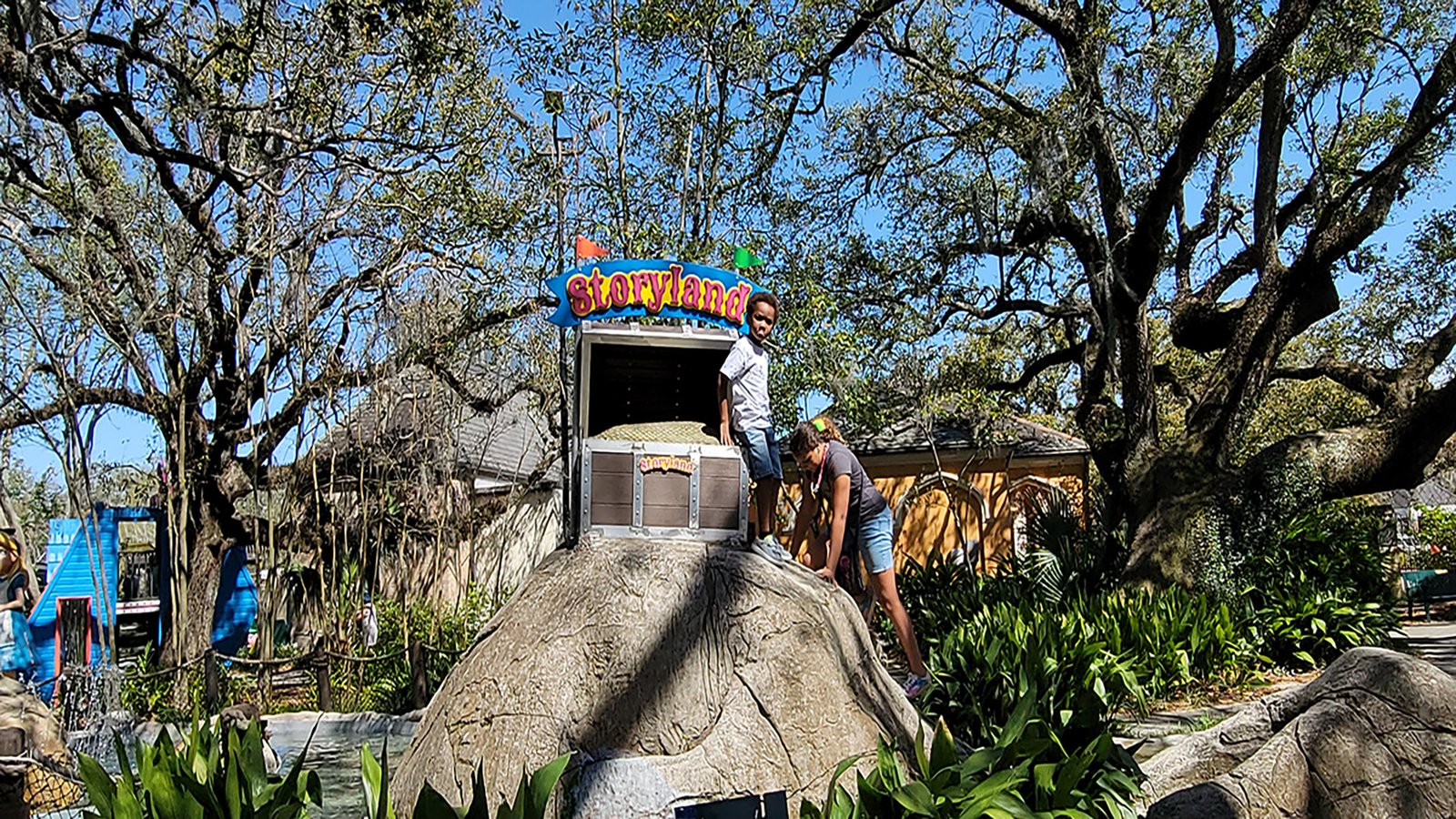
Imagine stepping straight through the pages of a giant, sunlit storybook where historic live oaks drape their moss over life-sized pumpkin carriages and legendary local artistry brings global folklore to life. Tucked inside the sprawling beauty of New Orleans City Park lies Storyland, a whimsical children's playground that has captured the imagination of families since 1956. Far more than just a collection of interactive statues, this nostalgic gem offers roadschooling travelers a vibrant, living classroom where deep Southern history, classic fairytales, and the legendary float-building legacy of Mardi Gras seamlessly intersect along winding, shaded paths.
 📸 Zee and JJ on top of the Storyville turtle sign at City Park
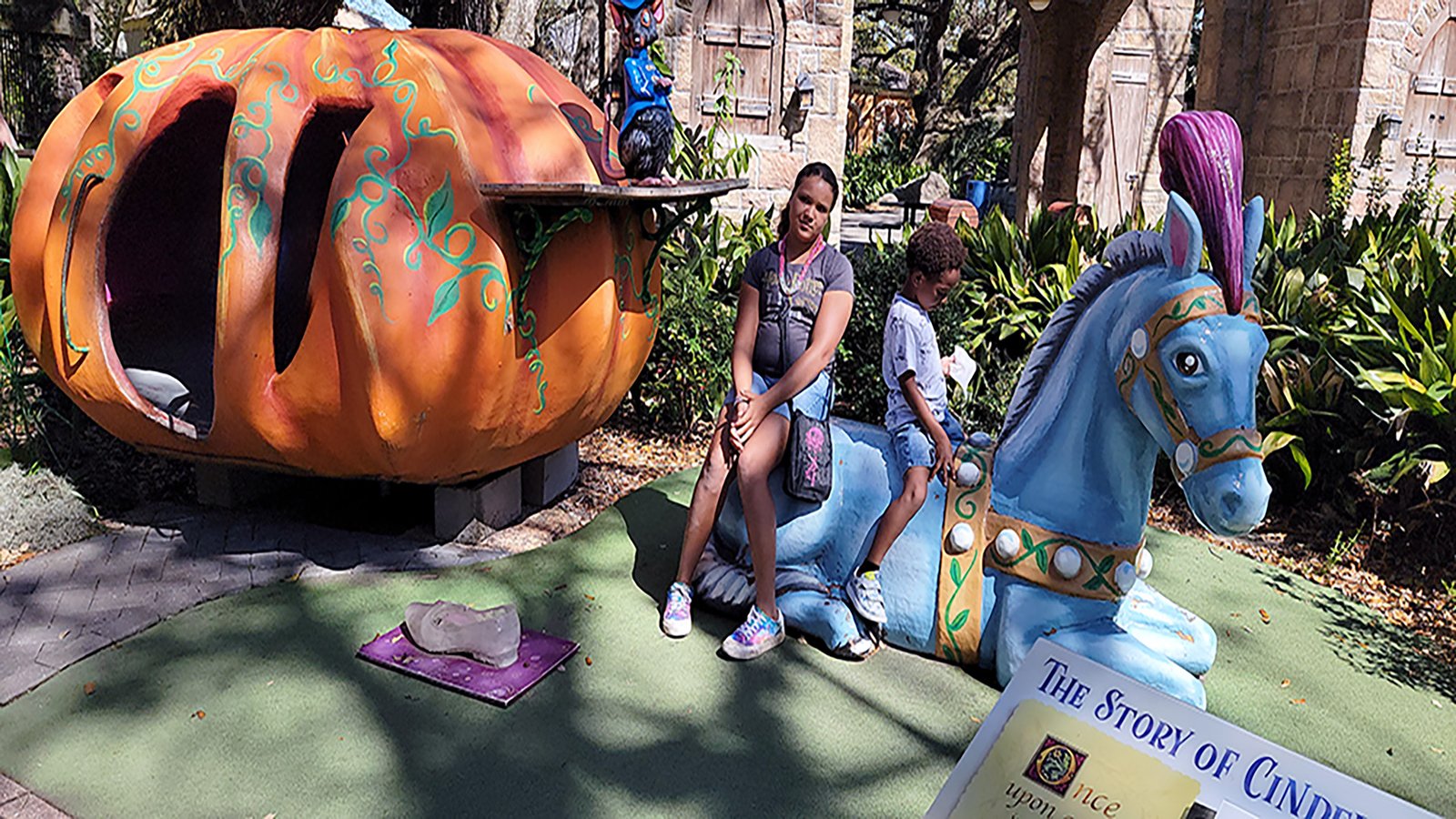
As you wander further along the paved, shaded trails, the initial sense of wonder transforms into a completely hands-on adventure. Every turn reveals another interactive sculpture, inviting young explorers to actively step into the stories rather than just observe them from a distance. From climbing up onto Cinderella's legendary steed to weaving through clusters of oversized, colorful mushrooms and standing face-to-face with the clever West African trickster Anansi, the park masterfully bridges the gap between physical play and cultural education. It serves as a perfect reminder of why the best classrooms rarely have four walls, standing out as an unforgettable stop for any nomadic family looking to discover the deep artistic and historical layers hidden right in the heart of the Crescent City.
""Inside Storyland, the magic isn't just in the fairytales—it's in the way historic live oaks, legendary Mardi Gras float artistry, and hands-on discovery turn a simple afternoon walk into an unforgettable living classroom.""
🎨 Interactive Art Meets Hands-On History
W
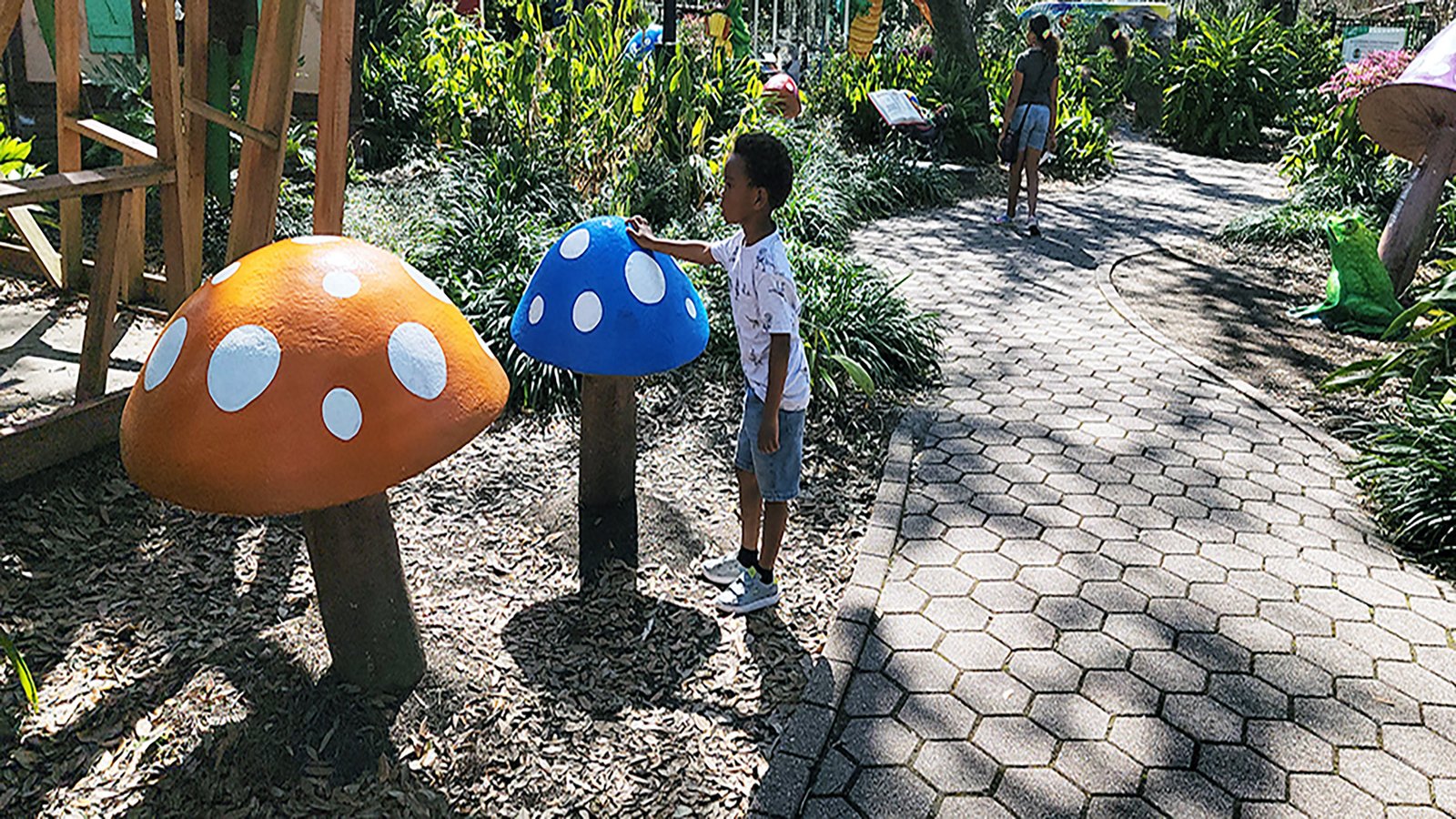 📸 Zee and JJ smelling the mushrooms
hat makes Storyland an exceptional stop for roadschooling is how effortlessly it integrates local culture into physical play. Instead of viewing art behind ropes, kids are encouraged to actively engage with the exhibits—whether they are sitting atop the intricately detailed blue Cinderella carriage horse or weaving through clusters of vibrant, oversized fairytale mushrooms. The park creates a sensory-rich environment where literature, local history, and outdoor exploration naturally collide under the shade of New Orleans' spectacular live oaks.
Beyond the European classics, the park also opens the door to broader historical and cultural discussions. Interactive exhibits featuring global folklore, such as the West African trickster Anansi the Spider, give families a fantastic springboard for daily lessons on diverse storytelling traditions. It is a space where art isn't just observed; it's climbed on, explored, and thoroughly lived.
🗿 Mardi Gras Legacies and a Complicated Heritage
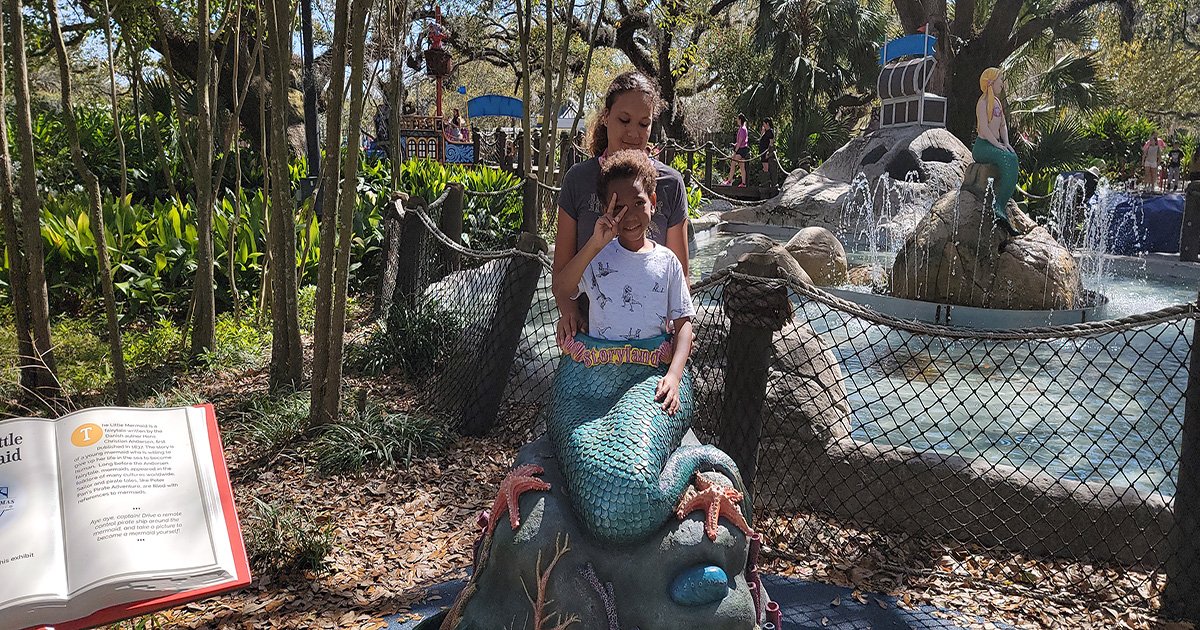 📸 Zee posing as a mermaid
Behind the whimsical facade of Storyland lies a rich, multi-layered history that offers profound talking points for roadschooling families. The park’s iconic, oversized figures are deeply connected to New Orleans’ unique cultural identity, having been originally sculpted out of plaster and cement by the legendary Blaine Kern. Known affectionately as "Mr. Mardi Gras," Kern’s early work here laid the foundations for the artistic legacy that still defines the city's world-famous carnival floats today.
However, looking closer at the park's history also opens the door to critical social studies lessons. Opened in the mid-1950s, the playground was originally caught in the era of systemic segregation, remaining fully segregated until 1958. Delving into how this whimsical park transitioned into a space of inclusive, public community learning provides the kids with an unvarnished, real-world glimpse into the complexities of the American South's progress—proving that even a fairytale setting holds deep, valuable historical truths.